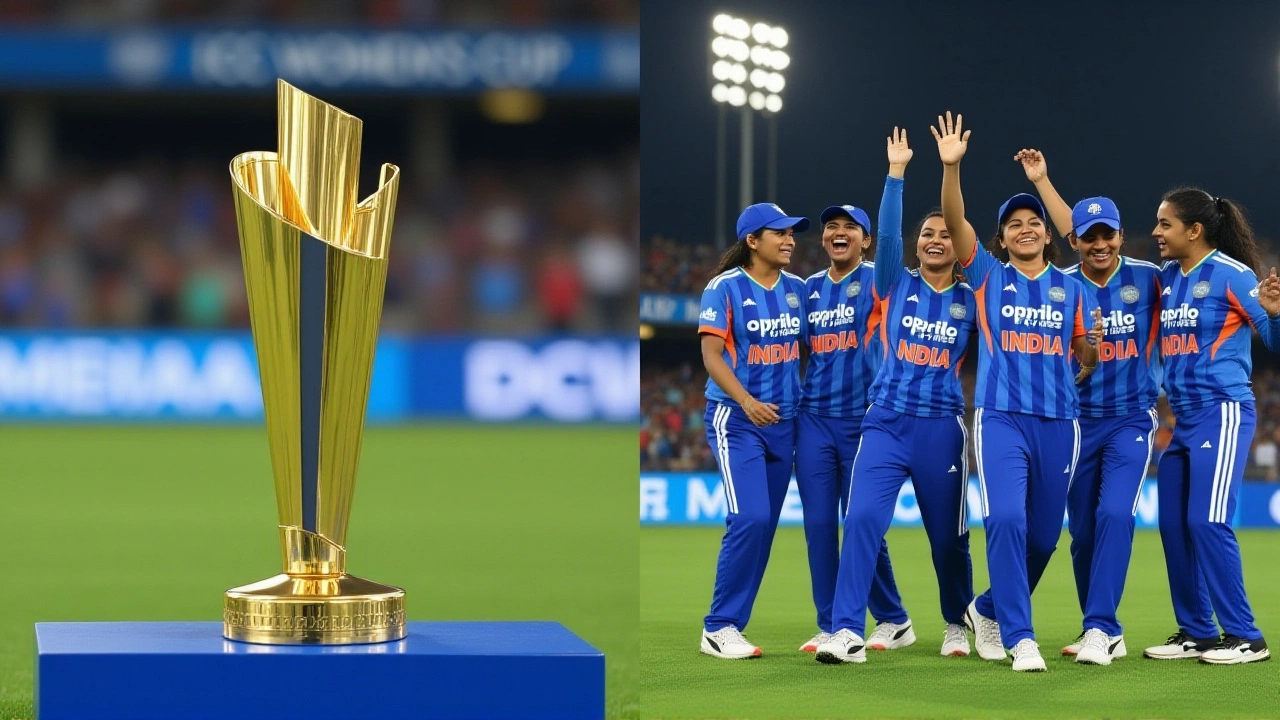
The wait is finally over. On Saturday, May 2, 2026, Board of Control for Cricket in India (BCCI) officially unveiled the 15-member squad that will carry the hopes of millions into the ICC Women's T20 World Cup 2026England and Wales. The announcement, made at a press conference in Mumbai, confirms that veteran leader Harmanpreet Kaur, captain will once again steer the ship, with rising star Smriti Mandhana, vice-captain by her side.
Here’s the thing: this isn’t just another tournament roster. It’s a calculated blend of seasoned grit and youthful fire, designed specifically for the unique challenges of playing in English conditions. With the final scheduled for July 5 at Lord’s, every selection tells a story about where Indian cricket sees its future.
A Leadership Duo Built on Experience
At the helm is Harmanpreet Kaur, now 36. She’s not new to pressure. Since taking the reins in October 2022, she’s guided India to an impressive 64.28% win rate in T20 Internationals—18 wins out of 28 matches. Her leadership style? Calm under fire. Remember that semi-final run in 2023? That was her calling the shots.
Backing her up is Smriti Mandhana, 29. The left-handed opener has been a machine since her debut in 2013, amassing 2,845 runs at a strike rate of 128.43. But it’s her consistency that matters most here. In a format where momentum shifts in overs, having someone who can anchor the innings while keeping the scoreboard ticking is invaluable.
“We wanted continuity,” said BCCI Secretary Jay Shah during the announcement. “Harmanpreet knows what it takes to win big tournaments, and Smriti brings the firepower we need at the top.”
The Core: Balance Between Power and Precision
Let’s talk batting depth. Shafali Verma, the 22-year-old from Rohtak, returns as the aggressive opener. Her job? Take the attack early. Behind her, Jemimah Rodrigues and Bharati Fulmali provide stability in the middle order. Then there’s Richa Ghosh—the wicketkeeper-batter who has quietly become one of the most reliable finishers in world cricket.
And then there’s Yastika Bhatia. At 25, she’s emerged as a crucial backup keeper and lower-order hitter. Having two keepers in the squad gives selectors flexibility—a luxury you don’t always get in T20 cricket.
But wait. The real twist lies in the bowling attack. It’s balanced, versatile, and tailored for English pitches.
Bowling Attack: Pace, Spin, and Surprise
Renuka Singh Thakur leads the pace unit. Known for her ability to extract bounce and move the ball laterally, she’s perfect for the seaming conditions expected in England. Arundhati Reddy adds height and experience, while Kranti Gowda brings raw speed and aggression.
On the spin front, Radha Yadav remains the cornerstone. Her left-arm orthodox delivery is deadly in the death overs. Shreyanka Patil, the young off-spinner from Bengaluru, offers variety and control in the middle phase. And let’s not forget Deepti Sharma and Sneh Rana—two all-rounders who can change games with both bat and ball.
This isn’t just a team. It’s a puzzle piece-by-piece assembled to counter specific threats. Australia’s power-hitters? Handled by disciplined fielding and smart bowling changes. South Africa’s pace battery? Met with experienced spinners who thrive in slower conditions.
Group Stage Challenges: A Tough Road Ahead
India lands in Group A—a group many are calling the “group of death.” Alongside them are Australia, Bangladesh, Pakistan, Netherlands, and South Africa. Their first match? Against Pakistan on June 14 at Edgbaston, Birmingham. High stakes. High emotion.
Then comes Netherlands on June 17 at Headingley, Leeds. A tricky opponent known for their resilience. Followed by South Africa on June 21 at Old Trafford, Manchester. And Bangladesh on June 25, also at Old Trafford. Finally, Australia on June 28 at Lord’s, London—the home of cricket itself.
Each venue has its own character. Edgbaston favors batters early on. Headingley offers swing. Old Trafford can be slow and sticky. Lord’s? Well, history weighs heavy there. Winning at Lord’s means something different.
Preparation and Prize Money: What’s at Stake?
The team begins training at the National Cricket Academy in Bengaluru on May 10, before heading to England on June 1 for acclimatization. They’ll play county sides to fine-tune their strategies.
Financially, the stakes have never been higher. The ICC has set the total prize pool at $10 million USD—a 20% increase from 2023. Winners take home $2.4 million. Runners-up get $1.2 million. Even group-stage participants earn $100,000 per match. This isn’t just sport. It’s investment in women’s cricket.
According to ICC media reports from March 2026, the tournament will reach an estimated global audience of 1.2 billion viewers across 180 countries. Broadcast partners include Star Sports in India, Sky Sports in the UK, and Fox Sports in Australia.
Why This Matters Beyond the Boundary
Last time India reached the semifinals—in 2023—they lost narrowly to Australia. This time, they’re aiming higher. Not just to compete, but to conquer. For years, Indian women’s cricket has grown in visibility, participation, and professionalism. This squad represents that growth.
It’s also symbolic. Young girls watching these players see themselves reflected in them. When Shafali smashes a six or Radha bowls a perfect yorker, it inspires a new generation to pick up a bat or ball.
Frequently Asked Questions
Who is the captain of the Indian women's T20 World Cup 2026 squad?
Harmanpreet Kaur, aged 36, has been appointed captain for the ICC Women's T20 World Cup 2026. She has led India since October 2022, maintaining a strong win record of 64.28% in T20 Internationals. Her leadership was instrumental in India's semi-final run in the 2023 edition held in South Africa.
When and where will the ICC Women's T20 World Cup 2026 take place?
The tournament runs from June 12 to July 5, 2026, hosted jointly by England and Wales. Matches begin at 7:00 PM IST. India's campaign starts on June 14 against Pakistan at Edgbaston, Birmingham, with the final scheduled for July 5 at Lord's Cricket Ground in London.
Which teams are in Group A with India?
India is placed in Group A alongside Australia, Bangladesh, Pakistan, Netherlands, and South Africa. This group is considered highly competitive, featuring three former finalists and emerging nations like Netherlands, making qualification for the Super Eight stage challenging.
What is the prize money structure for the 2026 tournament?
The total prize pool is $10 million USD. Winners receive $2.4 million, runners-up $1.2 million, semifinalists $600,000 each, and group-stage participants earn $100,000 per match played. This represents a 20% increase from the 2023 edition, reflecting growing investment in women's cricket globally.
How does the squad composition reflect strategic planning?
The squad balances experience and youth, with veterans like Harmanpreet and Deepti Sharma guiding younger talents such as Shafali Verma and Shreyanka Patil. Two wicketkeepers (Richa Ghosh, Yastika Bhatia) offer batting flexibility, while the bowling mix includes pacers (Renuka, Arundhati) and spinners (Radha, Shreyanka) suited for English pitch conditions.
When does Team India begin preparation for the tournament?
Team India begins its preparation camp at the National Cricket Academy in Bengaluru on May 10, 2026. The team travels to England on June 1, 2026, for acclimatization and practice matches against county teams ahead of their opening fixture on June 14.