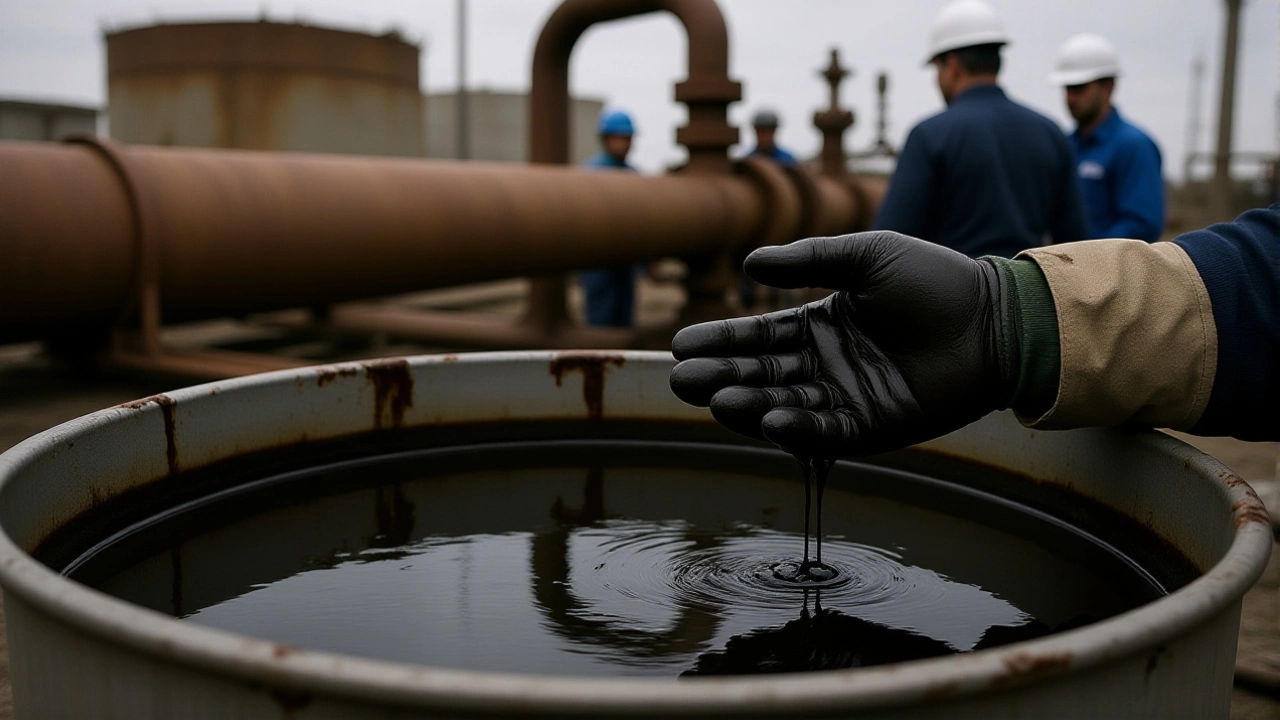
Global oil markets took a sharp turn this week, with Brent crude slipping below the psychological $100 barrier for the first time in weeks. The drop wasn't just market noise—it was a direct reaction to shifting geopolitical winds between Washington and Tehran.
On Monday, international benchmarks tumbled by over 6%, sending shockwaves through trading floors from London to Mumbai. By Wednesday, the decline had deepened, reflecting growing investor confidence that a potential peace agreement could de-escalate tensions in the Middle East. For consumers and businesses alike, this isn't just about stock tickers; it's about fuel costs, inflation, and economic stability.
The Numbers Behind the Drop
The data tells a clear story of rapid correction. On Monday, Brent crude fell 5.60% to trade at $97.74 per barrel around 10:30 AM IST. West Texas Intermediate (WTI) followed suit, dropping 5.82% to $90.98. But the selling pressure didn't stop there.
By mid-week, the July contract for Brent crude had shed $11.57, a 10.53% decline, settling at $98.30 per barrel. WTI saw an even steeper fall, losing $12.39 or 12.11% to hit $89.88. These aren't minor fluctuations—they represent a significant rebalancing of risk premiums that had been baked into prices since February.
In India, the impact was equally pronounced on the Multi Commodity Exchange. May delivery contracts plunged ₹1,110 (11.45%) to close at ₹8,588 per barrel, with 12,132 lots traded. June contracts dropped ₹1,098 (11.69%) to ₹8,298, seeing 4,274 lots change hands. This synchronized global sell-off suggests traders are betting heavily on diplomatic progress rather than prolonged conflict.
Why Markets Are Reacting Now
Here’s the thing: oil prices don’t move in a vacuum. They’re driven by fear—and lately, that fear has been easing. Since joint US-Israeli strikes on Iran on February 28, crude prices had surged more than 30% above pre-conflict levels. The threat of supply disruptions in the Strait of Hormuz kept traders on edge.
But then came the signals. On Saturday, Donald Trump, President of the United States, announced that Washington and Tehran had largely completed discussions on a Memorandum of Understanding (MoU) for peace. He also suspended “Project Freedom,” the naval escort mission designed to protect ships passing through the Strait of Hormuz.
That suspension is huge. It signals trust—or at least a willingness to take risks—in diplomacy over military deterrence. Analysts noted that as soon as markets caught wind of these developments, selling pressure mounted across global benchmarks. The narrative shifted from “war premium” to “peace dividend.”
Human Cost and Shipping Chaos
Behind the charts lies a grim reality. According to reports from NDTV, the earlier phase of the conflict left approximately 1,600 cargo ships stranded in the Strait of Hormuz, trapping nearly 22,000 sailors. For ten weeks, roughly 20,000 mariners remained stuck in the Gulf region, unable to return home due to maritime blockades and security concerns.
This human toll underscores why any move toward de-escalation matters beyond economics. Safe passage isn’t just about oil flow—it’s about livelihoods, families, and global trade integrity. As negotiations advance, resolving these logistical nightmares will be critical to restoring normalcy.
What Does This Mean for India?
India imports over 85% of its crude oil needs, making it highly sensitive to global price swings. A sustained drop below $100 offers tangible relief. Lower input costs can translate into reduced petrol and diesel prices domestically, potentially cooling inflationary pressures that have weighed on household budgets.
Yet caution remains warranted. While current prices reflect optimism, they haven’t returned to pre-February lows. Prices remain 30% higher than before the conflict began. If talks stall or new tensions emerge, those gains could evaporate quickly. Still, for now, policymakers see this dip as a welcome breather amid broader economic challenges.
Geopolitical Tensions and Regional Reactions
Not everyone is cheering the prospect of a US-Iran deal. Israel publicly expressed dissatisfaction, stating the proposed terms did not align with its security expectations. Meanwhile, Trump criticized former President Barack Obama’s approach to Iran’s nuclear program, calling past agreements a “big mistake” he refuses to repeat.
These internal political dynamics add layers of complexity. Any final agreement must navigate not only bilateral interests but also regional alliances and domestic politics in both countries. The path forward is fragile—one misstep could reignite hostilities.
Looking Ahead: Key Developments to Watch
The coming weeks will test whether rhetoric translates into action. Traders are watching closely for:
- Official signing of the MoU between US and Iranian representatives
- Resumption of safe shipping lanes in the Strait of Hormuz without military escorts
- Announcements regarding comprehensive nuclear talks
- Responses from key allies like Saudi Arabia and Israel
If diplomacy holds, we may see further declines in crude prices, benefiting import-dependent economies like India. But if negotiations falter, expect volatility to return swiftly. Until then, the market remains cautiously optimistic—but never complacent.
Frequently Asked Questions
Why did crude oil prices fall so sharply this week?
Prices dropped because investors believe a peace deal between the US and Iran is imminent. With reduced fears of supply disruption in the Strait of Hormuz, traders sold off their positions, causing Brent crude to fall below $100 and WTI near $90.
How does this affect everyday consumers in India?
Lower global crude prices reduce import costs for India, which relies on imported oil for most of its energy needs. This can lead to cheaper petrol and diesel, helping ease inflation and lower transportation expenses for households and businesses.
What role did Donald Trump play in this market shift?
Trump announced that the US and Iran had nearly finalized a peace MoU and suspended Project Freedom, the naval protection initiative in the Strait of Hormuz. His statements signaled a diplomatic breakthrough, triggering market optimism and subsequent price drops.
Are oil prices likely to stay low?
It depends on whether the US-Iran talks succeed. While current prices reflect hope, they’re still 30% above pre-conflict levels. If negotiations fail or new tensions arise, prices could rebound quickly. Markets remain volatile until a formal agreement is signed.
What happened to the sailors trapped in the Strait of Hormuz?
Around 22,000 sailors were stranded aboard 1,600 cargo ships for nearly ten weeks due to conflict-related blockades. Their release hinges on restored safe passage, which ties directly into the success of ongoing diplomatic efforts between the US and Iran.